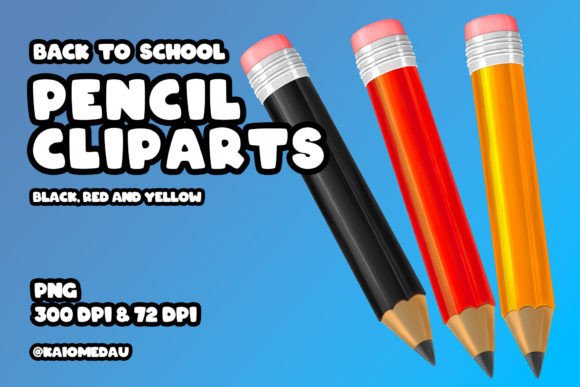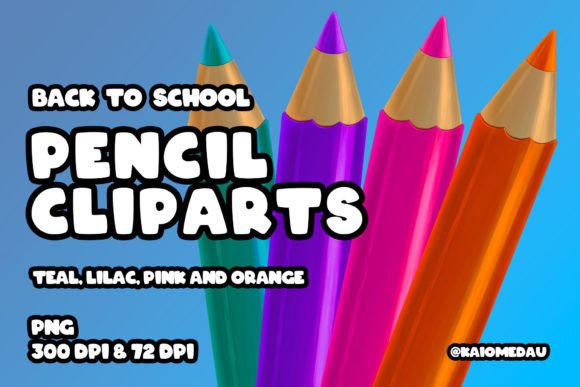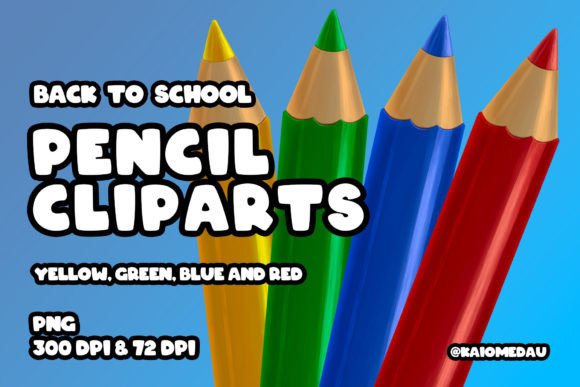
Back to School Pencil Cliparts
There’s something quietly powerful about the humble pencil—the soft scratch of graphite, the faint scent of cedar, the way it fits naturally in a hand ready to learn or create. That tactile, nostalgic energy is precisely what makes Back to School Pencil Cliparts more than just digital assets. They’re subtle emotional anchors—gentle visual cues that signal readiness, curiosity, and care. Whether you’re printing welcome banners for your third-grade classroom, designing a back-to-school newsletter for parents, or building a small business’s seasonal social media campaign, these illustrations offer grounded, human-centered design support.
Why Four Thoughtfully Colored Pencils Matter
This kit includes four distinct pencil illustrations—red, blue, yellow, and green—each rendered as high-fidelity PNGs. The color choices aren’t arbitrary. Red draws attention without aggression—ideal for callouts or deadlines. Blue conveys trust and calm, perfect for resource guides or student handbooks. Yellow radiates warmth and optimism, fitting for welcome posters or encouragement cards. Green suggests growth, balance, and fresh starts—ideal for goal-setting worksheets or wellness-themed classroom materials.
Because each file comes in both 300 DPI (print-ready) and 72 DPI (web-optimized) versions, you avoid last-minute resizing headaches. No pixelation on bulletin board cutouts. No blurry thumbnails in email headers. And because every image has a transparent background, there’s no need to wrestle with clipping masks or white-box artifacts when layering onto photos, gradients, or textured backgrounds.
Real-Time Time Savings for Educators and Content Creators
Teachers often spend evenings adapting free clipart—cropping, erasing backgrounds, adjusting proportions—just to get one usable element. With Back to School Pencil Cliparts, that friction disappears. A fifth-grade teacher can drop the blue pencil into Canva alongside a “Growth Mindset Goals” worksheet in under 30 seconds. A homeschooling parent building a custom planner inserts the green pencil beside weekly learning targets—no design experience required.
For freelance designers or small business owners launching a Back to School product line—think printable planners, teacher appreciation kits, or themed stickers—the consistency across colors matters. These aren’t generic vector icons; they’re cohesive, hand-drawn-style illustrations that share the same line weight, texture, and perspective. That visual harmony builds brand credibility faster than mixing mismatched assets from multiple sources.
Where These Cliparts Shine—and Where to Pause
They excel in contexts where authenticity and approachability matter: classroom door decorations, editable Google Slides templates, DIY reward charts, or even embroidered patches for school spirit gear. Because the lines are clean but slightly organic—not overly polished or cartoonish—they appeal across age groups. A middle school counselor might use the red pencil on a “Let’s Talk” flyer; a university writing center could feature the yellow pencil in a workshop promo without seeming infantilized.
That said, these aren’t built for complex animation or layered interactivity. If you need SVGs with editable paths for web development, or AI-based scalable vectors for large-format signage, this kit won’t replace those tools. It’s purpose-built for practical, everyday visual communication—not technical versatility. Think of it as reliable stationery in digital form: simple, well-made, and ready when you are.
Beyond Decoration: Supporting Learning Through Visual Consistency
Research shows that consistent visual cues improve information retention—especially for neurodiverse learners and younger students. Using the same red pencil icon across assignment instructions, rubrics, and feedback forms creates a gentle, predictable anchor. When students see that familiar shape next to “Check Your Work,” it becomes part of their mental workflow—not just decoration.
One elementary art teacher shared how she used the green pencil illustration as a recurring motif in her “Artist’s Choice” rotation board. Students didn’t just recognize the symbol—they began associating it with autonomy and creative permission. That kind of subtle reinforcement is hard to replicate with stock graphics lacking intentional design language.
Thoughtful Integration, Not Just Insertion
Because these files are transparent and resolution-optimized, integration goes beyond dragging and dropping. Try scaling the yellow pencil to 120% and placing it behind a title in a PDF handout—it adds depth without competing for attention. Layer the blue pencil at 40% opacity beneath student-submitted digital artwork to unify submissions visually. Or combine two pencils diagonally in the corner of a Zoom virtual classroom background for a warm, low-key academic vibe.
Bloggers covering education trends have used the red and green pencils side-by-side in infographics comparing “Traditional vs. Growth-Focused Assessment”—leveraging color psychology without needing explanatory legends. Small publishers creating back-to-school activity books appreciate how the consistent line quality holds up across dozens of pages, avoiding the jarring shifts in style common with mixed-source clipart.
A Resource That Grows With You
Unlike trend-driven graphics that feel dated by October, these coloring pencil illustrations lean into timeless schoolroom aesthetics—not retro gimmicks. Their quiet craftsmanship means they work just as well in August as they do during spring review season or even in professional development materials for educators.
If you're evaluating clipart options, ask yourself: Does this support clarity—or add noise? Does it reflect the tone I want my materials to convey? Will it still feel appropriate if I reuse it across multiple projects this year? Back to School Pencil Cliparts answers yes to all three—not with flash, but with thoughtful, functional design.
They won’t replace lesson planning or curriculum development. But they *do* remove one small, persistent barrier between intention and execution—giving teachers more time to teach, creators more space to refine, and learners more moments of genuine connection with the material in front of them.