Stained Glass Back to School Clipart
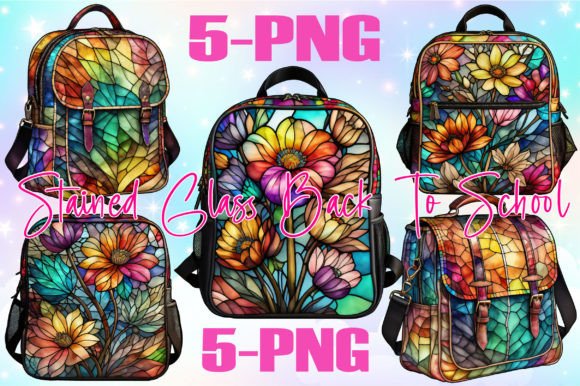
Imagine sunlight catching the vibrant, jewel-toned edges of a hand-cut stained glass window—now picture that same luminous energy translated into a crisp, ready-to-cut digital design for your next back-to-school project. That’s what Stained Glass Back to School Clipart delivers: not just another school-themed graphic, but a layered, dimensional word art vinyl decal file built for precision and visual impact.
This is a digital download—not a physical item—but one designed with real-world making in mind. Inside the zipped folder, you’ll find five high-resolution PNG files (300 DPI, transparent background), each sized and optimized for import into popular cutting machines like Cricut Explore, Silhouette Cameo, Brother ScanNCut, and other compatible software platforms. No tracing, no resizing guesswork—just clean vector-ready transparency, ready to cut, layer, or adapt.
Why Stained Glass Style Works for Back-to-School
The stained glass aesthetic brings instant depth and craft-forward appeal. Unlike flat, cartoonish icons or generic fonts, this style uses bold outlines, intentional color separation, and implied light refraction—qualities that translate beautifully to vinyl decals, classroom signage, and paper crafts. It signals care, intention, and handmade quality without requiring hand-cutting skills.
For educators, it adds quiet sophistication to bulletin boards or welcome displays. For small business owners selling custom school supplies, it elevates product labels or packaging. For bloggers and content creators, it offers a distinctive visual hook for social posts, printable planners, or newsletter headers—something recognizably “school,” yet fresh enough to stand out in a crowded feed.
Creative Applications Across Roles
Different users bring different goals—and this clipart adapts accordingly:
- Educators: Cut individual letters from the word art to spell out student names on cubbies or lockers. Layer colored vinyl pieces over black outlines to build a collaborative “stained glass wall” display where each child contributes a shape or color.
- Small Business Owners: Use the files as base elements in branded back-to-school bundles—e.g., pair “ABC” with custom chalkboard-style labels for pencil cases or backpack tags. Resize cleanly for stickers, iron-on transfers, or even sublimation blanks.
- Content Creators & Bloggers: Import the PNGs directly into Canva or Adobe Express to overlay on photo backgrounds (a sunlit desk, open notebook, or stack of books). Adjust blending modes to mimic light-through-glass effects—or extract just the outline for line-art illustrations in tutorials.
- Hobbyists & Paper Crafters: Print on vellum or translucent cardstock, then back with colored tissue paper for true stained glass effect in handmade cards or framed mini-art. Or use the files as stencils for watercolor resist techniques.
Practical Tips for Best Results
Because these are PNGs—not SVGs—the files rely on pixel clarity, not infinite scalability. Here’s how to keep output sharp and consistent:
- Stick within recommended size ranges: For Cricut Design Space, avoid scaling beyond 200% of original dimensions. If you need larger cuts, print-and-cut is often more reliable than full-machine cutting at extreme sizes.
- Test color layering first: The transparent background means colors must be assigned intentionally in your cutting software. Try a small test cut on scrap vinyl to verify registration and alignment—especially if layering multiple colors for a multi-hue stained glass look.
- Keep contrast high for readability: These designs shine when foreground and background have strong value contrast—e.g., deep cobalt letters on pale yellow vinyl, or ruby red on cream cardstock. Avoid pairing low-contrast hues unless aiming for subtle texture.
- Organize by use case: Rename files meaningfully before unzipping—e.g., “StainedGlass_Alphabet_A-B-C_300dpi.png”—so you can quickly locate the right version when prepping for different projects.
Variations You Can Build From This Base
The five included PNGs aren’t interchangeable—they’re variations meant to spark iteration. One may emphasize bold serif letterforms; another might feature simplified shapes ideal for younger students; a third could include subtle geometric borders for framing. Use them as springboards:
- Add hand-drawn flourishes in Procreate or Illustrator—extend the “lead lines” into vines, pencils, or tiny apples for thematic continuity.
- Swap out default colors using your cutting software’s recolor tool—try muted sage and terracotta for a modern earthy vibe, or electric teal and violet for STEM-focused classrooms.
- Combine with free educational icons (like open books or graduation caps) from trusted sources—align them carefully to preserve the stained glass rhythm and spacing.
- Create matching sets: use one file for a classroom door sign, another resized for student name tags, and a third flattened and simplified for a printable worksheet border.
Designing With Audience in Mind
Whether you’re designing for kindergarteners or college-bound teens, clarity matters more than complexity. The stained glass style supports both: its bold lines read well at a distance (ideal for hallway banners), while its intricate color breaks invite closer looking (great for interactive learning stations).
For younger audiences, focus on single-word applications—“READ,” “LEARN,” “GROW”—paired with large, friendly shapes. For older students or professional development settings, lean into phrases like “Think Deeply” or “Create Boldly,” using tighter kerning and refined color palettes that feel mature but still warm.
And remember: consistency builds recognition. If you’re using this clipart across multiple touchpoints—a welcome email, a printed syllabus, and a classroom poster—keep core colors, sizing ratios, and placement logic aligned. That cohesion tells your audience you’ve thought it through—not just dropped in a graphic.
A Tool That Grows With Your Ideas
Stained Glass Back to School Clipart isn’t meant to sit untouched in a downloads folder. It’s built to be opened, adjusted, combined, and reimagined—without demanding advanced design skills. Its strength lies in balance: structured enough to cut cleanly, expressive enough to reflect personality, and versatile enough to serve teachers setting up their first classroom and seasoned designers launching a seasonal product line.
You don’t need to replicate stained glass craftsmanship to honor its spirit. You just need to choose where light enters—and let the design help you guide it.