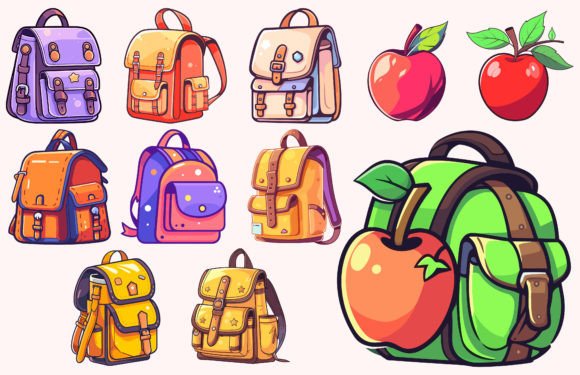
Back to School Book Vector Bundle: A Strategic Design Asset for Purpose-Driven Creators
When you’re building educational materials, launching a learning-focused brand, or designing seasonal campaigns for schools, libraries, or tutoring services, visual consistency and thematic clarity matter—not just aesthetically, but strategically. The Back to School Book Vector Bundle isn’t another generic clipart pack. It’s a curated set of scalable, editable vector assets built around two high-intent symbolic motifs: the book with apple illustration and the book with pencil illustration. These aren’t decorative afterthoughts. They’re visual shorthand—immediately legible, culturally resonant, and deeply aligned with education, growth, and preparation.
Why This Bundle Fits Real Workflows—Not Just Seasonal Trends
Most back-to-school design resources fade after August. But the Back to School Book Vector Bundle delivers long-term utility because its core elements—books, apples, pencils—are foundational symbols that extend beyond calendar-based marketing. An educator can use the apple-and-book vector to illustrate classroom values in a staff handbook. A freelance course designer might layer the pencil-and-book shape into a workbook cover, then reuse the same vector—scaled, recolored, or repositioned—in slide decks, email headers, and printable worksheets. Because each file includes both 1 PNG file (for quick web use) and 1 EPS vector file, you retain full flexibility: resize without pixelation, adjust stroke weight, isolate individual shapes, or convert to SVG for interactive web projects.
The bundle contains 100 vector shapes, all built from clean anchor points and logically grouped layers. That means no hunting through tangled paths or ungrouped objects. You open the EPS, select “Apple + Book,” change its fill to match your brand palette in under 10 seconds, and drop it into a Canva template—or import directly into Adobe Illustrator for precise alignment with typography and layout grids. This isn’t about speed alone; it’s about reducing decision fatigue so you spend energy on strategy—not troubleshooting file compatibility.
Strategic Use Cases: Where Intentional Application Creates Leverage
Consider these grounded applications—each rooted in real goals, not just aesthetics:
- Brand Positioning for EdTech Startups: If you’re launching a literacy app for elementary students, using the apple-and-book vector across your website hero, onboarding screens, and teacher-facing pitch decks signals continuity and trust. It quietly reinforces your domain expertise—without requiring explanatory copy.
- Curriculum Development for Homeschool Co-ops: When assembling digital lesson kits, embedding the pencil-and-book vector into activity instructions (e.g., “Draw your idea here”) creates visual scaffolding. Learners recognize the symbol as an invitation to engage—not just decoration.
- Small-Business Marketing for Tutoring Studios: A local math tutor can use the same vector asset across Google Business posts, printed flyers, and Zoom backgrounds. Consistency builds recognition—even in low-attention contexts like a parent scrolling past a social post.
- Educational Publishing Workflow: Editors preparing a teacher’s guide can place the book-and-pencil vector beside “Try This” callouts. Its presence subtly cues actionability—guiding readers toward application, not passive consumption.
What to Consider Before Opening the ZIP File
The Back to School Book Vector Bundle is delivered as a single ZIP archive—requiring extraction via WinZIP, WinRAR, or your OS’s native tool (double-click works on most modern systems). That small step matters strategically: if you’re working under tight deadlines or managing multiple contractors, ensure everyone knows how to access the raw files—and confirm which version of Illustrator or Affinity Designer they’re using. EPS files maintain backward compatibility, but newer features (like gradient meshes or transparency modes) may render differently across versions.
Also consider contextual fit. A playful apple-and-book vector may feel dissonant in a corporate leadership training manual—but highly appropriate in a K–5 summer reading challenge. Ask yourself: Does this symbol support the message—or distract from it? Does it align with your audience’s expectations, or introduce unnecessary cognitive load? The strongest use of the Back to School Book Vector Bundle happens when the visual choice is preceded by a clear communication objective—not the reverse.
Avoiding the “Bundle Trap”: When More Assets Don’t Equal Better Outcomes
Having 100 vector shapes sounds powerful—until you realize you’ve spent 45 minutes cycling through nearly identical apple variants while missing a deadline. The risk isn’t in the bundle itself, but in deploying it without intention. Random selection leads to visual noise, inconsistent tone, and diluted messaging. Instead, treat the Back to School Book Vector Bundle like a toolkit—not a buffet.
Start with one primary motif: choose either the book with apple illustration or the book with pencil illustration as your anchor symbol. Use it consistently across three key touchpoints (e.g., email banner, landing page header, printable checklist). Then—and only then—introduce secondary shapes to support hierarchy or nuance (e.g., a single pencil icon next to “Step 2” in a process diagram). This approach builds recognition, reinforces structure, and keeps your visual language focused.
Editing, Scaling, and Long-Term Maintenance
Because every shape in the Back to School Book Vector Bundle is built as a true vector—not traced raster art—you retain full control over scalability and adaptation. Need the apple-and-book icon at 24px for a favicon? At 2400px for a trade show banner? Both work identically. But scalability also implies responsibility: if you modify stroke weights or simplify paths for web use, save those edits as new files—don’t overwrite the original EPS. That preserves fidelity for future print projects or client handoffs.
For teams, store the extracted files in a shared, version-controlled folder (e.g., Google Drive with naming conventions like BSB_AppleBook_v1_EPS.ai). Include a simple README noting recommended color palettes, minimum size thresholds, and usage guidelines. That small documentation step prevents misalignment down the line—especially when freelancers or interns join a project mid-cycle.
Thinking Beyond Back to School
The most strategic users of the Back to School Book Vector Bundle don’t limit it to August launches. They repurpose its symbolism year-round: the apple-as-growth metaphor fits wellness coaching materials; the pencil-as-action motif supports goal-setting journals or habit trackers. One curriculum designer uses the book-and-pencil vector in her quarterly reflection templates—not as “school-themed,” but as shorthand for “document your progress.” That kind of intentional reinterpretation transforms a seasonal asset into a durable part of your visual vocabulary.
Ultimately, the value of the Back to School Book Vector Bundle isn’t measured in file count or download speed—it’s measured in how efficiently it helps you communicate what matters, to whom it matters, and with the clarity your audience deserves. When chosen deliberately, edited purposefully, and deployed consistently, these vectors do more than decorate—they clarify, connect, and reinforce.
Final Note on Execution
You’ll receive the files compressed in one ZIP file. Extraction is straightforward—no special software required. But the real leverage comes not from unzipping, but from asking: What outcome am I trying to support with this visual? Who needs to understand it instantly? And how does it fit within everything else my audience sees? Answer those questions first—and the Back to School Book Vector Bundle becomes less of a download, and more of a decision-making ally.